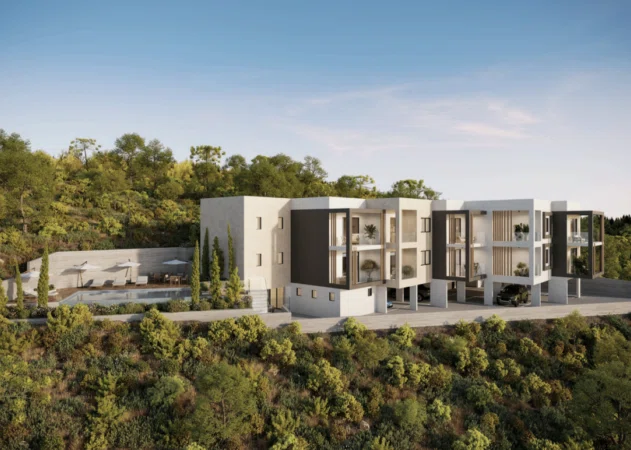
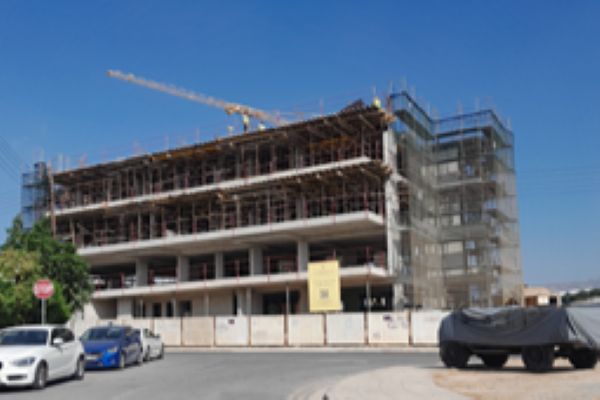
Object typeResidential
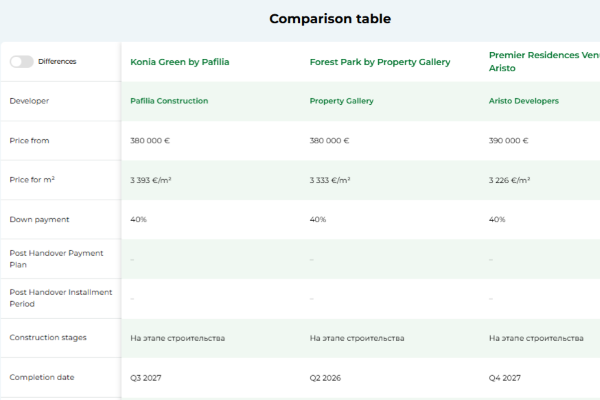
Completion dateQ4 2028
DeveloperDex-Tek Group
Total areafrom 69 m² to 142 m²
Down Payment30%

Every year, Cyprus is becoming an increasingly popular destination for those looking to buy seaside real estate. At the same time, the island’s tax system is considered one of the most attractive in Europe: the annual state property tax has been canceled, and most mandatory payments are due only upon purchase, sale, or when receiving rental income.
Below, we’ll take a closer look at the taxes that property owners in Cyprus need to consider.
When purchasing a property, the buyer is required to pay several mandatory fees.
VAT
Applies to the purchase of new real estate from a developer.
The standard VAT rate is 19%. However, if the property is purchased as a primary residence and its price does not exceed €350,000, a reduced rate of 5% applies to the first 130 sqm of floor space.
Example:
Suppose you purchase a new apartment costing €300,000 from a developer.
If the property meets the conditions of the preferential program (for example, the buyer registers it as their primary residence), then the preferential VAT rate of 5% applies:
If the apartment is purchased as an investment or its value exceeds €350,000, the standard 19% VAT rate applies:
After the transaction is completed, the new owner registers the property title with the Land Registry by paying the Transfer Fee.
Properties purchased directly from a developer are subject to VAT but are exempt from the transfer fee.
Properties purchased on the secondary market are exempt from VAT but are subject to the Transfer Fee, which is currently reduced by 50%.
For example, if the price of a property from a developer is up to €85,000, the full tax rate is 3%, with a discount of 1.5%;
from €85,001 to €170,000, the full rate is 5%, with a reduced rate of 2.5%;
from €170,001, the full rate is 8%, with a reduced rate of 4%.
One of the advantages of the Cypriot tax system is the absence of an annual property tax, which was abolished in 2017.
If an owner sells a property for more than the purchase price, the resulting profit is subject to Capital Gains Tax. The base rate is 20% of the taxable profit.
Suppose an apartment was purchased for €250,000 and sold a few years later for €350,000. The profit was €100,000.
Excluding any tax exemptions, the tax would be: 100,000 × 20% = €20,000.
The amount of tax depends on the owner’s tax residency status and the total amount of their annual income.
Starting in 2026, the tax-free income threshold for individuals is 22,000 euros per year; above that amount, a progressive income tax scale applies.
Let’s suppose that an apartment brings the owner €1,800 per month.
The annual income will be: 1,800 × 12 = €21,600.
Since this amount does not exceed the tax-free threshold of €22,000, no income tax is due in this case.
Let’s consider another example.
The rent is €2,500 per month. Annual income: 2,500 × 12 = €30,000.
Of this amount, the first €22,000 is tax-free, and the remaining €8,000 is taxed at the first rate of the progressive income tax scale.
If income is between 22,000 and 32,000 €, the rate is 20%;
From 32,000 to 42,000 € — the rate is 25%;
From €42,000 to €72,000 — the rate is 30%;
From €72,000 — the rate is 35%.
In addition to income tax, rental income earned by an individual is subject to a 2.65% contribution to the GeSY national health care system.
If a property owner receives rental income, they are required to report it on their annual tax return.
If an individual’s total annual income, including rental income, exceeds €22,000, advance income tax must be paid. This tax is paid in two equal installments — by July 31 and December 31 of the current tax year.
To ensure accurate tax calculations, it is recommended to keep rental agreements, bank statements, documents detailing property maintenance expenses, and other supporting documents.
The deadlines depend on the type of tax:
The amount of mandatory payments is calculated based on the value of the property, the nature of the transaction, and the owner’s tax status. The exact amount is usually determined by a lawyer, accountant, or tax advisor handling the transaction.
Most taxes and fees are paid through the Cyprus Tax Department or the Department of Lands and Surveys. Many payments can be made online through government services.
Failure to pay taxes on time may result in interest and penalties, and could even lead to legal proceedings, as well as create complications when registering property rights, selling real estate, or conducting other legally significant transactions.